A home cook once prepared a fresh green salad for dinner. While adding ingredients, she reached for a bottle labeled vinegar but her recipe asked for vinaigrette.
For a moment, she paused and wondered if both were the same thing. This situation happens in many kitchens because people often confuse these two terms.
Understanding the difference between vinegar and vinaigrette helps cooks prepare dishes correctly and understand recipes better.
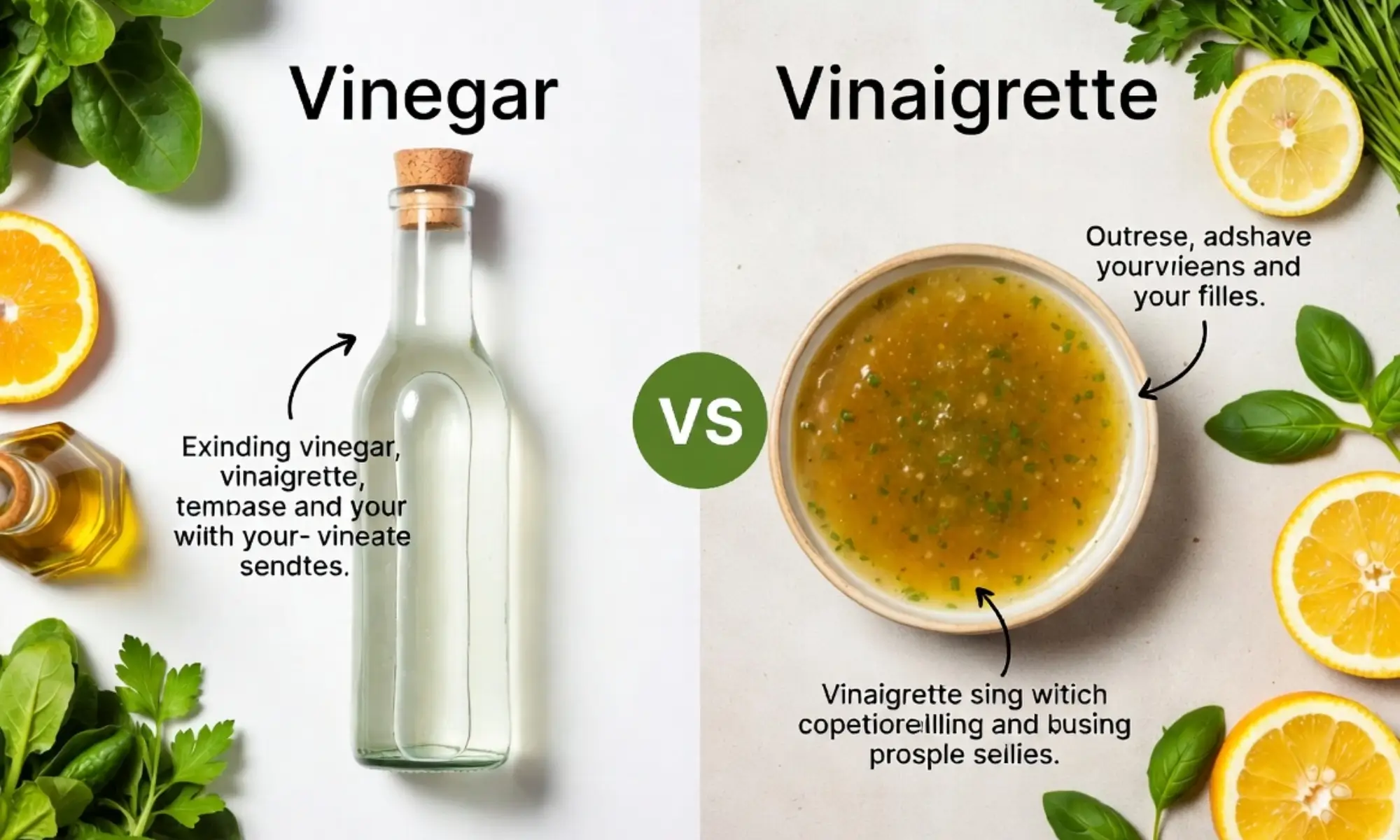
The difference between vinegar and vinaigrette is mainly about composition and usage. Vinegar is a sour liquid made through fermentation, while vinaigrette is a dressing made by mixing vinegar with oil and other ingredients.
Learning the difference between vinegar and vinaigrette is useful for home cooks, chefs, and food lovers.
When people understand the difference between vinegar and vinaigrette, they can create balanced flavors in salads and dishes more easily.
Key Difference Between Vinegar and Vinaigrette
The main difference between vinegar and vinaigrette is that vinegar is a single ingredient, while vinaigrette is a mixture or dressing made using vinegar, oil, and seasonings.
Vinegar is acidic and strong in taste, while vinaigrette is milder and more balanced because oil softens the acidity.
Why Is It Important to Know the Difference?
Knowing the difference between vinegar and vinaigrette is important in cooking, food education, and culinary arts. Chefs and cooking students must understand ingredients and sauces correctly to create balanced recipes.
In society, food culture plays an important role in daily life and hospitality. When cooks understand the difference between ingredients and dressings, they can prepare healthier and tastier meals. Restaurants, culinary schools, and home kitchens all benefit from understanding how vinegar and vinaigrette are used differently in food preparation.
Pronunciation
Vinegar
- US: /ˈvɪn.ɪ.ɡɚ/
- UK: /ˈvɪn.ɪ.ɡə/
Vinaigrette
- US: /ˌvɪn.əˈɡrɛt/
- UK: /ˌvɪn.əˈɡret/
Now that we understand their meanings and sounds, let us explore the detailed difference between vinegar and vinaigrette.
Difference Between Vinegar and Vinaigrette
1. Basic Definition
Vinegar is a sour liquid produced through fermentation.
Examples
- Apple cider vinegar is used in cooking.
- White vinegar is used for cleaning and food preparation.
Vinaigrette is a salad dressing made from vinegar and oil.
Examples
- A classic vinaigrette uses olive oil and vinegar.
- Lemon vinaigrette adds citrus flavor to salads.
2. Composition
Vinegar contains mainly acetic acid and water.
Examples
- Distilled vinegar contains acetic acid.
- Rice vinegar is made from fermented rice.
Vinaigrette contains vinegar, oil, and seasonings.
Examples
- A vinaigrette may include mustard and herbs.
- Honey vinaigrette includes honey and olive oil.
3. Taste
Vinegar has a strong sour taste.
Examples
- Vinegar adds sharp flavor to pickles.
- Vinegar is used to balance sauces.
Vinaigrette has a balanced flavor.
Examples
- Vinaigrette tastes mild due to oil.
- It adds gentle tang to salads.
4. Usage
Vinegar is used as an ingredient.
Examples
- Vinegar is used in marinades.
- Vinegar helps preserve food.
Vinaigrette is used as a dressing.
Examples
- Vinaigrette is poured over salads.
- It is used on roasted vegetables.
5. Preparation
Vinegar is produced through fermentation.
Examples
- Grapes ferment to produce wine vinegar.
- Apples ferment to make apple cider vinegar.
Vinaigrette is prepared by mixing ingredients.
Examples
- Oil and vinegar are shaken in a bottle.
- Herbs are added to create flavored vinaigrette.
6. Texture
Vinegar is thin like water.
Examples
- Vinegar pours easily.
- It spreads quickly in liquids.
Vinaigrette is thicker.
Examples
- Oil gives vinaigrette a smooth texture.
- It coats salad leaves well.
7. Culinary Role
Vinegar enhances acidity.
Examples
- Vinegar balances sweet dishes.
- Vinegar brightens flavors in soups.
Vinaigrette enhances overall taste.
Examples
- Vinaigrette adds richness to salads.
- It combines sweet, sour, and savory flavors.
8. Storage
Vinegar has a long shelf life.
Examples
- Vinegar can last for years.
- It does not spoil easily.
Vinaigrette lasts for a shorter time.
Examples
- Homemade vinaigrette should be refrigerated.
- It is best used within days.
9. Variety
Vinegar comes in many types.
Examples
- Balsamic vinegar.
- Rice vinegar.
Vinaigrette also has many variations.
Examples
- Garlic vinaigrette.
- Dijon vinaigrette.
10. Purpose
Vinegar is a base ingredient.
Examples
- Vinegar is used in sauces.
- Vinegar is used in pickling.
Vinaigrette is a finished dressing.
Examples
- Vinaigrette completes a salad.
- It is served directly on food.
Nature and Behaviour of Both
Vinegar behaves as a strong acidic liquid that enhances flavor and preserves food. It reacts quickly with other ingredients and provides sharp taste.
Vinaigrette behaves as a balanced mixture. The oil softens the acidity of vinegar and creates a smoother flavor suitable for salads and vegetables.
Why Are People Confused?
People confuse these terms because vinaigrette contains vinegar as one of its main ingredients. When recipes mention vinegar or vinaigrette, beginners may assume they are interchangeable. However, vinegar is only one component of vinaigrette.
Difference and Similarity Table
| Feature | Vinegar | Vinaigrette | Similarity |
| Meaning | Sour fermented liquid | Salad dressing | Both used in cooking |
| Composition | Acidic liquid | Oil + vinegar mixture | Vinegar is part of vinaigrette |
| Taste | Strong sour | Balanced tangy | Both add flavor |
| Usage | Ingredient | Dressing | Both improve dishes |
Which Is Better in What Situation?
Vinegar is better when a recipe requires acidity or preservation. It is used in pickling, marinades, sauces, and cooking processes. Because it is strong and concentrated, small amounts can dramatically change the flavor of a dish.
Vinaigrette is better when a dish needs a ready-to-use dressing. Salads, roasted vegetables, and cold dishes benefit from vinaigrette because it combines oil and vinegar into a balanced flavor that coats ingredients evenly.
Metaphors and Similes
Examples:
- “Her comments were sharp like vinegar.”
- “Their teamwork blended like oil and vinegar in a vinaigrette.”
Connotative Meaning
Vinegar
Positive: sharpness, energy
Negative: bitterness or harsh attitude
Example: “His words had a little vinegar.”
Vinaigrette
Positive: balance and harmony
Neutral: culinary dressing
Example: “Her ideas blended like a perfect vinaigrette.”
Idioms or Expressions
Examples:
- “He spoke with vinegar in his voice.”
- “Their opinions mixed like oil and vinegar.”
Works in Literature
- Consider the Fork — Food writing, Bee Wilson, 2012
- Salt, Fat, Acid, Heat — Culinary guide, Samin Nosrat, 2017
Movies Related to Food Themes
- Julie & Julia — 2009 — USA
- Chef — 2014 — USA
Frequently Asked Questions
1. Is vinaigrette the same as vinegar?
No. Vinaigrette is a dressing made with vinegar, oil, and seasonings.
2. Can vinegar be used instead of vinaigrette?
Not directly, because vinegar alone is too strong.
3. What is the basic ratio for vinaigrette?
Usually three parts oil and one part vinegar.
4. Is vinaigrette healthy?
Yes, especially when made with olive oil and natural ingredients.
5. Why does vinaigrette separate?
Oil and vinegar naturally separate, so shaking mixes them again.
How Both Are Useful for Our Surroundings
Both vinegar and vinaigrette play important roles in everyday cooking. Vinegar is used for preserving food, cleaning produce, and enhancing flavors. Vinaigrette adds balanced taste to fresh dishes such as salads and vegetables. Together, they contribute to healthy and flavorful meals.
Conclusion
The difference between vinegar and vinaigrette lies mainly in their composition and culinary purpose.
Vinegar is a fermented acidic liquid used as an ingredient, while vinaigrette is a prepared dressing made by combining vinegar with oil and seasonings.
While vinegar adds strong acidity, vinaigrette provides a balanced flavor suitable for salads and light dishes.
Understanding the difference between vinegar and vinaigrette helps cooks use the right ingredient in the right situation.
Whether preparing marinades, pickles, or fresh salads, knowing how these two elements work improves cooking skills and enhances flavor in everyday meals.