One evening, a home cook stood in the kitchen, holding two bowls—one filled with red lentils and the other with green lentils.
She wondered why her soup sometimes turned creamy and other times stayed firm. This simple moment highlights the difference between lentils.
Lentils are small, round legumes that come in many types, colors, and textures. Understanding the difference between lentils helps people cook better meals and choose the right ingredient for each dish.
The difference between lentils also matters for nutrition, taste, and cooking time. Whether you are a beginner or a food expert, knowing the difference between lentils can improve your cooking and health choices.
Key Difference Between the Two
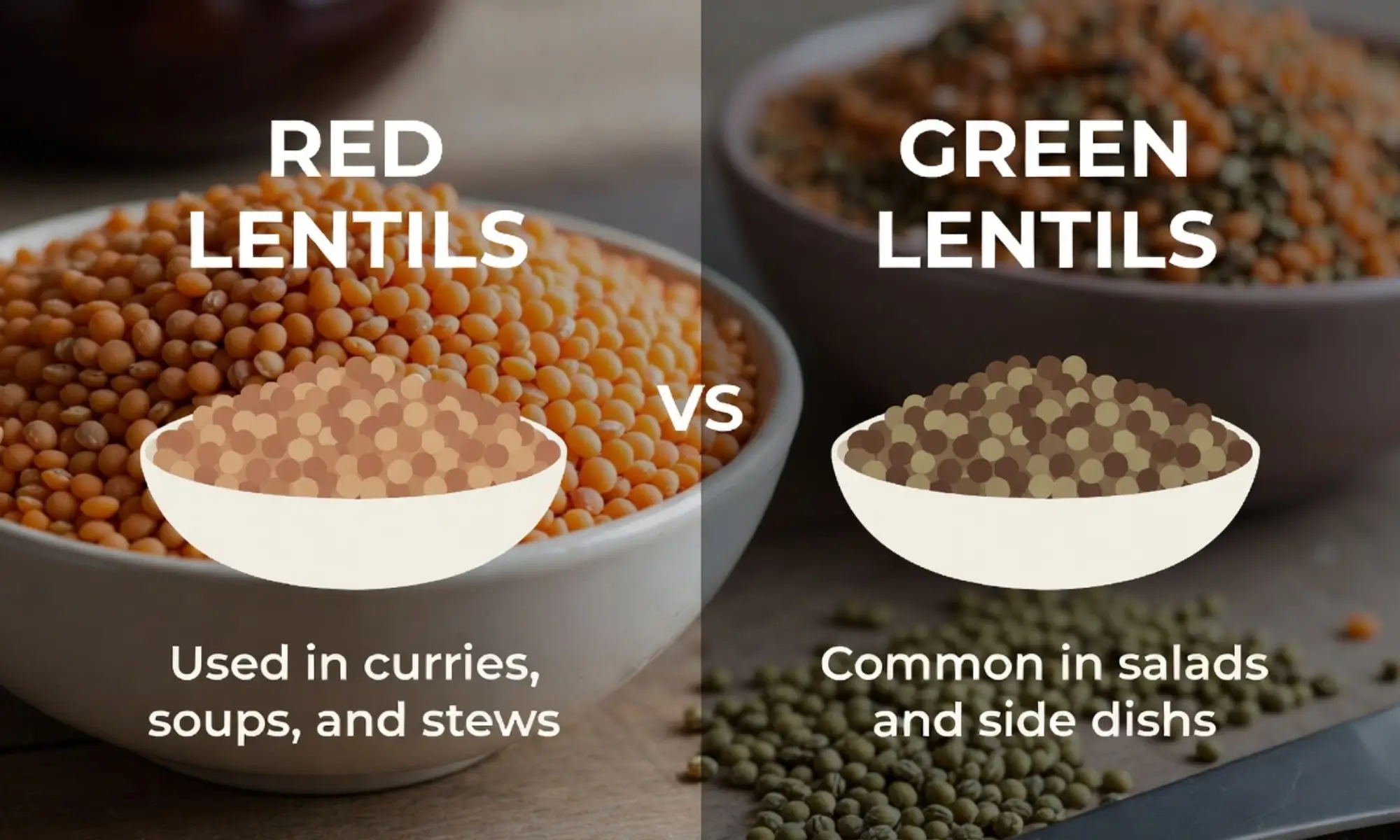
The main difference between lentils lies in their type, color, texture, and cooking behavior, such as red lentils becoming soft and green lentils staying firm.
Why Knowing Their Difference Is Important
Knowing the difference helps in cooking the right dish, improving taste, and maintaining proper nutrition. It is useful for chefs, home cooks, and health-conscious people.
Pronunciation
Lentils
- US: /ˈlɛn.təlz/
- UK: /ˈlen.tɪlz/
Now let’s explore the detailed difference between lentils.
Difference Between Lentils
1. Color
Different lentils have different colors like red and green.
Examples (Red Lentils)
- Used in soups for a soft texture.
- Common in South Asian dishes.
Examples (Green Lentils)
- Used in salads for firmness.
- Common in European recipes.
2. Texture After Cooking
Red lentils become soft, while green lentils stay firm.
Examples (Red Lentils)
- Turn mushy in dal.
- Blend well in soups.
Examples (Green Lentils)
- Hold shape in salads.
- Stay firm in side dishes.
3. Cooking Time
Red lentils cook faster than green lentils.
Examples (Red Lentils)
- Ready in 15–20 minutes.
- Good for quick meals.
Examples (Green Lentils)
- Take 30–40 minutes.
- Better for slow cooking.
4. Taste
Red lentils have a mild taste, while green lentils have a stronger flavor.
Examples (Red Lentils)
- Mild and slightly sweet.
- Good for light dishes.
Examples (Green Lentils)
- Earthy and rich.
- Good for hearty meals.
5. Shape
Red lentils are usually split, while green lentils are whole.
Examples (Red Lentils)
- Split and small.
- Lose shape easily.
Examples (Green Lentils)
- Round and whole.
- Keep their form.
6. Nutritional Value
Both are healthy but may vary slightly.
Examples (Red Lentils)
- High in protein.
- Good source of fiber.
Examples (Green Lentils)
- Rich in iron.
- Good for energy.
7. Usage in Cuisine
Different cuisines use different lentils.
Examples (Red Lentils)
- Used in Indian dal.
- Used in soups.
Examples (Green Lentils)
- Used in salads.
- Used in stews.
8. Appearance Before Cooking
They look different when raw.
Examples (Red Lentils)
- Bright orange or red.
- Smaller in size.
Examples (Green Lentils)
- Green or brown.
- Slightly larger.
9. Digestibility
Red lentils are easier to digest.
Examples (Red Lentils)
- Good for children.
- Easy on the stomach.
Examples (Green Lentils)
- Slightly heavier.
- Better for adults.
10. Storage Life
Both have good shelf life but differ slightly.
Examples (Red Lentils)
- Last long in dry storage.
- Should be kept sealed.
Examples (Green Lentils)
- Also long-lasting.
- Need dry conditions.
Nature and Behaviour of Both
Red Lentils
They are soft, quick-cooking, and easy to digest. They break down easily and create creamy textures.
Green Lentils
They are firm, slow-cooking, and hold their shape. They are ideal for dishes needing structure.
Why People Are Confused About Their Use
People are confused because all lentils look similar before cooking. They also belong to the same food group, but their cooking behavior is very different.
Table: Difference and Similarity
| Feature | Red Lentils | Green Lentils |
| Texture | Soft | Firm |
| Cooking Time | Fast | Slow |
| Taste | Mild | Earthy |
| Shape | Split | Whole |
| Similarity | Both are healthy legumes |
Which Is Better in What Situation?
Red Lentils
Red lentils are better for soups, curries, and dishes where a soft texture is needed. They cook quickly and are ideal for busy kitchens.
Green Lentils
Green lentils are better for salads and dishes where shape matters. They provide a firm bite and rich flavor.
Metaphors and Similes
Red Lentils
- “Soft like mashed potatoes.”
Green Lentils
- “Firm like small pebbles in a dish.”
Connotative Meaning
Red Lentils
- Positive: comfort, warmth
Example: “A bowl of red lentils feels like home.”
Green Lentils
- Positive: strength, richness
Example: “Green lentils add depth to meals.”
Idioms or Proverbs
- “Good things come in small packages.”
- “You reap what you sow.”
Works in Literature
- On Food and Cooking — Food Science — Harold McGee — 1984
- The Omnivore’s Dilemma — Non-fiction — Michael Pollan — 2006
Movies Related to Food
- Julie & Julia — 2009 — USA
- Chef — 2014 — USA
Frequently Asked Questions
1. What is the main difference between lentils?
The main difference is in color, texture, and cooking time.
2. Which lentil cooks faster?
Red lentils cook faster than green lentils.
3. Which lentil is better for soup?
Red lentils are better for soups.
4. Are lentils healthy?
Yes, both types are rich in protein and fiber.
5. Why are lentils important in daily life?
They provide affordable nutrition and are widely used in many cuisines.
Conclusion
The difference between lentils mainly depends on their type, texture, taste, and cooking behavior. Red lentils are soft and quick to cook, while green lentils are firm and flavorful.
Understanding the difference between lentils helps improve cooking skills and meal quality. Both types are healthy and useful in different dishes.
By learning the difference between lentils, you can choose the right one for your needs and enjoy better meals every day.