A traveler visiting an Italian restaurant once ordered pasta and noticed two popular options on the menu: Alfredo and Carbonara.
Both dishes looked creamy and delicious, yet the waiter explained they were prepared in completely different ways.
This simple dining experience highlights why many people search for the difference between Alfredo and Carbonara.
The difference between Alfredo and Carbonara lies mainly in their ingredients and cooking method. Alfredo sauce is made with butter, cream, and cheese, creating a rich and smooth texture.
Carbonara, on the other hand, uses eggs, cheese, cured meat, and pasta water to create a creamy sauce without heavy cream.
Understanding the difference between Alfredo and Carbonara helps food lovers, cooking students, and chefs appreciate authentic Italian cuisine.
Learning the difference between Alfredo and Carbonara also prevents confusion when ordering food or preparing pasta at home.
Key Difference Between Alfredo and Carbonara
The main difference between Alfredo and Carbonara is their ingredients and preparation method.
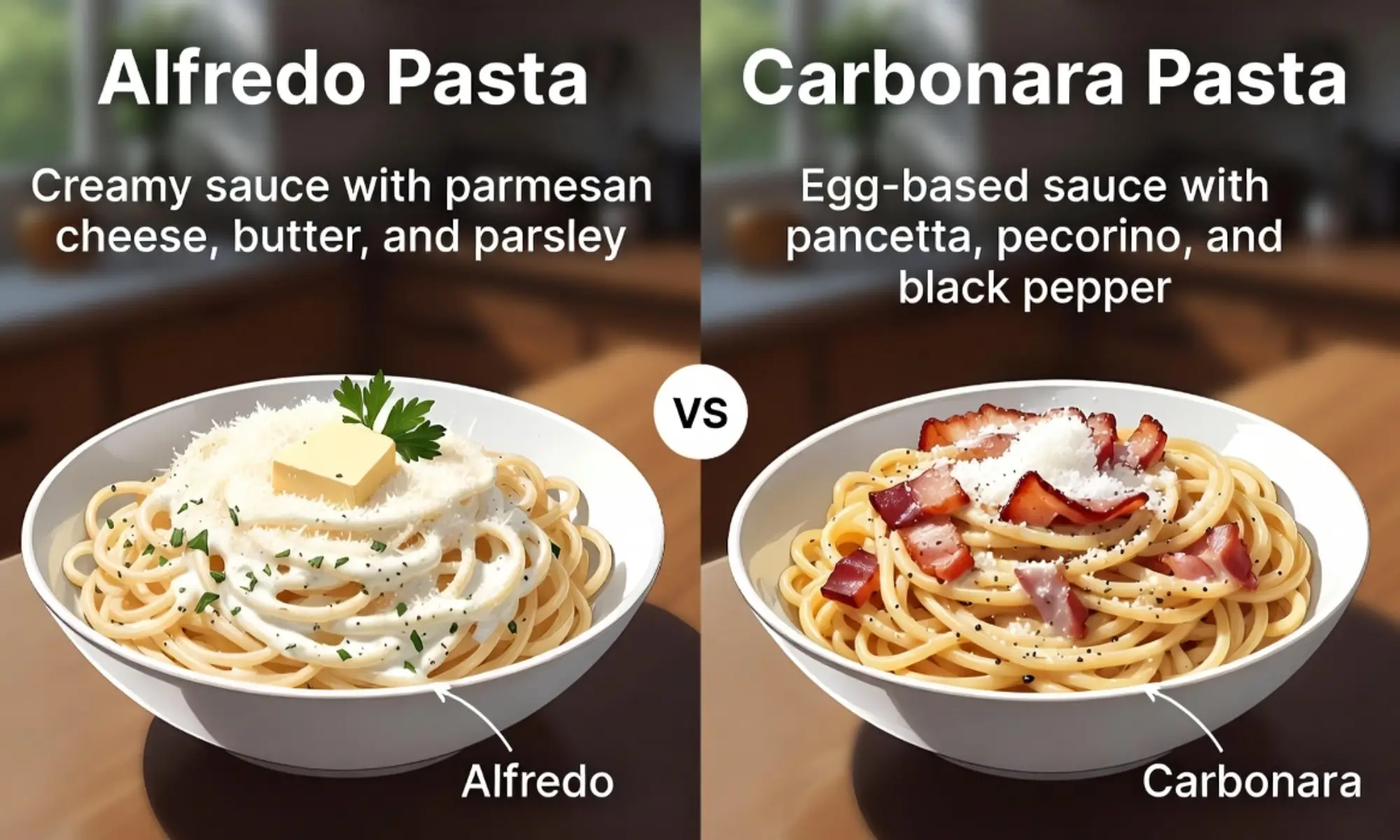
Alfredo sauce relies on butter, cream, and Parmesan cheese to create its creamy texture. Carbonara uses eggs, cheese, pancetta or bacon, and pasta water, creating a silky sauce without cream.
Why Is It Important to Know the Difference?
Knowing the difference between Alfredo and Carbonara is important for cooking enthusiasts, culinary students, and food professionals. In the culinary world, authentic recipes represent cultural traditions and regional cooking styles.
Understanding the difference helps people cook dishes correctly and respect traditional Italian cuisine. For restaurants and chefs, knowing these distinctions ensures accurate menus and authentic flavors. For home cooks, it improves cooking skills and helps them prepare the right pasta sauce for each recipe.
Pronunciation
Alfredo
- US: /ælˈfreɪ.doʊ/
- UK: /ælˈfreɪ.dəʊ/
Carbonara
- US: /ˌkɑːr.bəˈnɑː.rə/
- UK: /ˌkɑː.bəˈnɑː.rə/
Now that we understand the basics, let us explore the detailed difference between Alfredo and Carbonara.
Difference Between Alfredo and Carbonara
1. Main Ingredients
Alfredo uses butter, cream, and Parmesan cheese.
Examples
- Fettuccine Alfredo uses butter and cream.
- Chicken Alfredo adds grilled chicken to the creamy sauce.
Carbonara uses eggs, cheese, and cured pork.
Examples
- Spaghetti Carbonara includes eggs and pancetta.
- Traditional Carbonara uses Pecorino Romano cheese.
2. Sauce Texture
Alfredo produces a thick and creamy sauce.
Examples
- Alfredo sauce coats pasta heavily.
- Cream creates a smooth texture.
Carbonara creates a silky sauce.
Examples
- Eggs mix with pasta water to form a smooth coating.
- Carbonara sauce is lighter than Alfredo.
3. Cooking Method
Alfredo sauce is cooked with butter and cream on heat.
Examples
- Butter melts before cream is added.
- Cheese thickens the sauce.
Carbonara is prepared by mixing eggs with hot pasta.
Examples
- Eggs cook slightly from pasta heat.
- Pasta water helps create the sauce.
4. Traditional Ingredients
Alfredo commonly uses Parmesan cheese.
Examples
- Parmesan adds flavor.
- Butter enhances richness.
Carbonara uses Pecorino Romano and guanciale.
Examples
- Guanciale gives a salty flavor.
- Pecorino Romano adds sharp taste.
5. Origin
Alfredo originated in Rome but became popular worldwide.
Examples
- Alfredo sauce was created by Alfredo di Lelio.
- It spread through Italian restaurants globally.
Carbonara also originated in Italy.
Examples
- Carbonara developed in the Lazio region.
- It became famous in Roman cuisine.
6. Protein Content
Alfredo may include chicken or shrimp.
Examples
- Chicken Alfredo is a popular dish.
- Shrimp Alfredo is common in restaurants.
Carbonara traditionally uses cured pork.
Examples
- Pancetta is commonly used.
- Guanciale is used in authentic recipes.
7. Flavor Profile
Alfredo tastes rich and buttery.
Examples
- Cream adds smooth flavor.
- Butter creates richness.
Carbonara tastes salty and savory.
Examples
- Pancetta adds smoky flavor.
- Pecorino cheese adds sharpness.
8. Cream Usage
Alfredo uses heavy cream.
Examples
- Cream thickens the sauce.
- It creates a rich texture.
Carbonara does not use cream traditionally.
Examples
- Eggs create creaminess.
- Pasta water balances the sauce.
9. Pasta Types
Alfredo is often served with fettuccine.
Examples
- Fettuccine Alfredo is classic.
- Alfredo also pairs with penne.
Carbonara commonly uses spaghetti.
Examples
- Spaghetti Carbonara is traditional.
- Rigatoni Carbonara is also popular.
10. Appearance
Alfredo appears white and creamy.
Examples
- The sauce looks thick.
- Cheese gives a pale color.
Carbonara appears slightly yellow.
Examples
- Eggs give golden color.
- Pepper adds dark specks.
Nature and Behaviour of Both
Alfredo sauce behaves like a rich and creamy dressing for pasta. Its butter and cream content make it thick and smooth.
Carbonara behaves differently because it relies on eggs and pasta water to create a silky coating rather than a heavy cream sauce.
Why Are People Confused?
People often confuse these dishes because both appear creamy and are served with pasta. In many restaurants outside Italy, cream is sometimes added to carbonara, making it look similar to Alfredo.
Difference and Similarity Table
| Feature | Alfredo | Carbonara | Similarity |
| Main ingredient | Cream and butter | Eggs and cured pork | Both are pasta sauces |
| Texture | Thick and creamy | Silky and smooth | Both coat pasta |
| Origin | Italian cuisine | Italian cuisine | Both from Italy |
| Flavor | Rich and buttery | Savory and salty | Both flavorful |
Which Is Better in What Situation?
Alfredo is better when someone wants a rich, creamy pasta dish. It pairs well with chicken, seafood, and vegetables. Its heavy cream texture makes it comforting and satisfying.
Carbonara is better when someone prefers a lighter but flavorful pasta sauce. Its egg-based sauce and cured meat create a balanced dish that highlights traditional Italian cooking.
Metaphors and Similes
Examples:
- “Their teamwork blended like Alfredo sauce over pasta.”
- “His ideas mixed together like carbonara ingredients.”
Connotative Meaning
Alfredo
Positive: richness and comfort
Example: “The meal felt as comforting as Alfredo pasta.”
Carbonara
Positive: authenticity and tradition
Example: “The recipe stayed true like classic carbonara.”
Idioms or Expressions
Examples:
- “She added the final sauce to the plan.”
- “Their ideas blended perfectly like pasta and sauce.”
Works in Literature
- Italian Food — Culinary guide, Elizabeth David, 1954
- The Silver Spoon — Italian cookbook, Editoriale Domus, 1950
Movies Related to Food
- Eat Pray Love — 2010 — USA
- Chef — 2014 — USA
Frequently Asked Questions
1. What is the main difference between Alfredo and Carbonara?
Alfredo uses cream and butter, while Carbonara uses eggs, cheese, and cured pork.
2. Does Carbonara contain cream?
Traditional Carbonara does not use cream.
3. Which pasta is used for Alfredo?
Fettuccine is commonly used.
4. Which pasta is used for Carbonara?
Spaghetti is traditionally used.
5. Which sauce is richer?
Alfredo is usually richer because it contains cream and butter.
How Both Are Useful for Our Surroundings
Both Alfredo and Carbonara contribute to global culinary culture. Restaurants, chefs, and home cooks use these recipes to create delicious meals. They also help people learn about Italian cooking traditions and the art of pasta preparation.
Conclusion
The difference between Alfredo and Carbonara mainly lies in their ingredients and preparation methods. Alfredo sauce uses butter, cream, and cheese to create a rich and creamy pasta dish.
Carbonara uses eggs, cheese, and cured pork to produce a silky and flavorful sauce without cream.Understanding the difference between Alfredo and Carbonara helps food lovers appreciate authentic Italian cooking and choose the right pasta dish for their taste.
Whether someone prefers the creamy richness of Alfredo or the savory tradition of Carbonara, both sauces represent the beauty and diversity of Italian cuisine.