In a small town, when trouble arises, people often call for help without thinking twice—“Call the sheriff!” But when someone arrives, it might actually be a deputy.
This simple situation highlights the difference between deputy and sheriff, a topic many people misunderstand.
The difference between deputy and sheriff lies not just in titles, but in authority, responsibility, and leadership roles. While both serve law enforcement, the difference between deputy and sheriff becomes clear when we look closely at their duties in real-life scenarios.
Understanding the difference between deputy and sheriff helps you better appreciate how law enforcement works in your community.
Pronunciation (US & UK)
- Deputy
- US: /ˈdep.jə.t̬i/
- UK: /ˈdep.jʊ.ti/
- Sheriff
- US: /ˈʃer.ɪf/
- UK: /ˈʃer.ɪf/
Now that you know how they sound and where confusion begins, let’s dive deeper into the real distinctions.
Key Difference Between Deputy and Sheriff
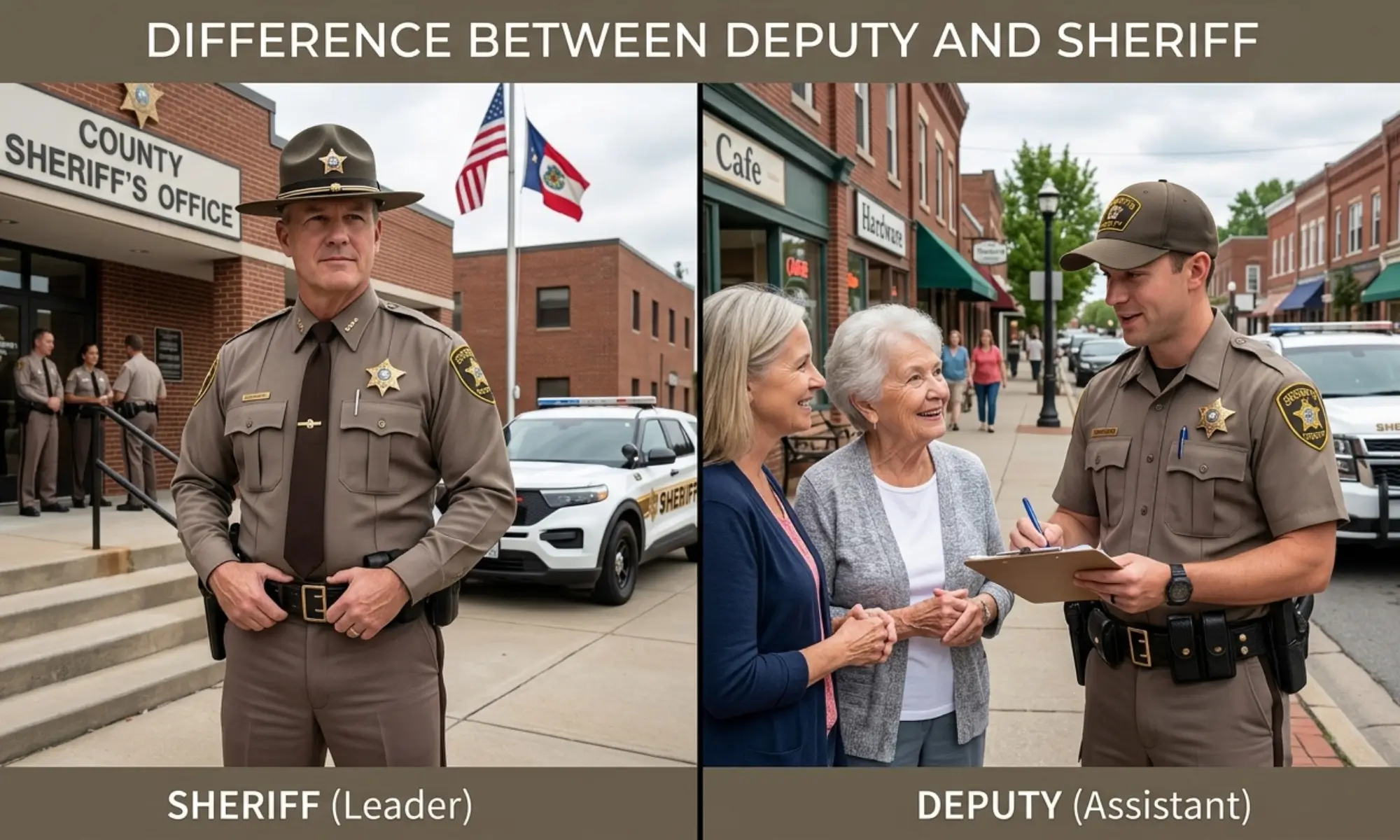
A sheriff is the elected head of a county’s law enforcement department, while a deputy is an appointed officer who works under the sheriff to enforce laws and maintain order.
Why Is It Important to Know the Difference?
Understanding the difference between deputy and sheriff is important for both learners and professionals. It helps citizens know who holds authority and who carries out duties. For students, it improves clarity in legal or social studies. For professionals, especially in law or journalism, accuracy matters. In society, knowing this difference builds trust in law enforcement and ensures proper communication during emergencies.
Difference Between Deputy and Sheriff (10 Detailed Points)
1. Position
- Sheriff: Highest authority in county law enforcement
- Example 1: The sheriff sets department policies
- Example 2: The sheriff represents the county publicly
- Deputy: Works under the sheriff
- Example 1: A deputy follows assigned duties
- Example 2: Deputies report to the sheriff
2. Selection
- Sheriff: Elected by the public
- Example 1: Citizens vote for sheriff
- Example 2: Campaigns are held
- Deputy: Appointed by sheriff
- Example 1: Sheriff hires deputies
- Example 2: No public voting involved
3. Authority Level
- Sheriff: Holds full authority
- Example 1: Can make department decisions
- Example 2: Leads major operations
- Deputy: Limited authority
- Example 1: Executes orders
- Example 2: Assists in operations
4. Responsibilities
- Sheriff: Administrative + operational
- Example 1: Budget planning
- Example 2: Policy making
- Deputy: Operational duties
- Example 1: Patrol areas
- Example 2: Arrest suspects
5. Leadership Role
- Sheriff: Leader
- Example 1: Leads team meetings
- Example 2: Assigns duties
- Deputy: Team member
- Example 1: Follows instructions
- Example 2: Supports team
6. Public Interaction
- Sheriff: Represents law enforcement
- Example 1: Talks to media
- Example 2: Attends public events
- Deputy: Direct public service
- Example 1: Responds to calls
- Example 2: Helps citizens
7. Decision Making
- Sheriff: Makes final decisions
- Example 1: Approves policies
- Example 2: Handles major cases
- Deputy: Executes decisions
- Example 1: Follows plans
- Example 2: Carries out tasks
8. Number of Officers
- Sheriff: Only one per county
- Example 1: One elected leader
- Example 2: Unique role
- Deputy: Many deputies
- Example 1: Multiple officers
- Example 2: Different shifts
9. Scope of Work
- Sheriff: Broad responsibilities
- Example 1: Jail management
- Example 2: Court security
- Deputy: Specific duties
- Example 1: Patrol duty
- Example 2: Investigation support
10. Accountability
- Sheriff: Accountable to public
- Example 1: Must win elections
- Example 2: Public scrutiny
- Deputy: Accountable to sheriff
- Example 1: Reports internally
- Example 2: Evaluated by sheriff
Nature and Behaviour
- Sheriff: Leadership-oriented, responsible, decision-maker, authoritative
- Deputy: Supportive, disciplined, action-focused, cooperative
Why People Are Confused
People often confuse them because both wear similar uniforms, perform law enforcement duties, and represent the same department. Media and movies also blur the roles, making the distinction less obvious.
Difference and Similarity Table
| Aspect | Sheriff | Deputy | Similarity |
| Role | Leader | Assistant | Both enforce law |
| Selection | Elected | Appointed | Serve public |
| Authority | High | Moderate | Legal power |
| Number | One | Many | Work together |
| Duties | Management + field | Field work | Maintain safety |
Which Is Better in What Situation?
A sheriff is better in situations requiring leadership, policy-making, or handling large-scale operations. For example, managing a county-wide emergency needs a sheriff’s authority and planning.
A deputy is better in day-to-day law enforcement tasks such as patrolling streets, responding to calls, and assisting citizens directly. Their role is more action-based and immediate.
Metaphors and Similes
- Sheriff: “The captain of the ship” (leader)
- Deputy: “The hands of the captain” (executor)
Connotative Meaning
- Sheriff: Positive (authority, leadership), sometimes neutral
- Example: “He acted like a sheriff, taking charge of the situation.”
- Deputy: Neutral to positive (support, reliability)
- Example: “She was the deputy of the team, always helping others.”
Idioms & Proverbs
- “New sheriff in town”
- Example: A new manager changed everything
- “Deputy duties” (less common but used informally)
- Example: He handled deputy duties while the boss was away
Works in Literature
- Sheriff of Nottingham (Robin Hood stories)
- Genre: Folklore | Writer: Traditional | Year: Medieval era
- The Deputy
- Genre: Drama | Writer: Rolf Hochhuth | Year: 1963
Movies Based on These Roles
- Sheriff themed:
- “Blazing Saddles” (1974, USA)
- “No Country for Old Men” (2007, USA)
- Deputy themed:
- “The Magnificent Seven” (1960, USA)
- “True Grit” (2010, USA)
FAQs
1. What is the main difference between deputy and sheriff?
A sheriff leads the department, while a deputy assists and follows orders.
2. Can a deputy become a sheriff?
Yes, by running in elections and winning public votes.
3. Do both have arrest powers?
Yes, both can enforce the law and make arrests.
4. Who has more authority?
The sheriff has more authority than a deputy.
5. Are both important for society?
Yes, both roles are essential for maintaining law and order.
Conclusion
The difference between deputy and sheriff is clear when we look at authority, responsibilities, and roles. A sheriff leads and manages, while a deputy supports and executes tasks.
Both are essential for a smooth law enforcement system. Understanding the difference between deputy and sheriff not only improves knowledge but also builds respect for their duties.
In society, they work together to ensure safety, justice, and peace. Knowing who does what helps you respond better in real-life situations and appreciate their roles more deeply.