Have you ever told someone to “be quick” or “run fast” and wondered if they mean the same thing? In everyday life, we use these words without thinking.
Imagine you’re late for school. Your mom says, “Be quick!” while your friend shouts, “Run fast!” Both push you to hurry, but in slightly different ways. Understanding the difference between quick and fast helps you speak more clearly and sound more natural.
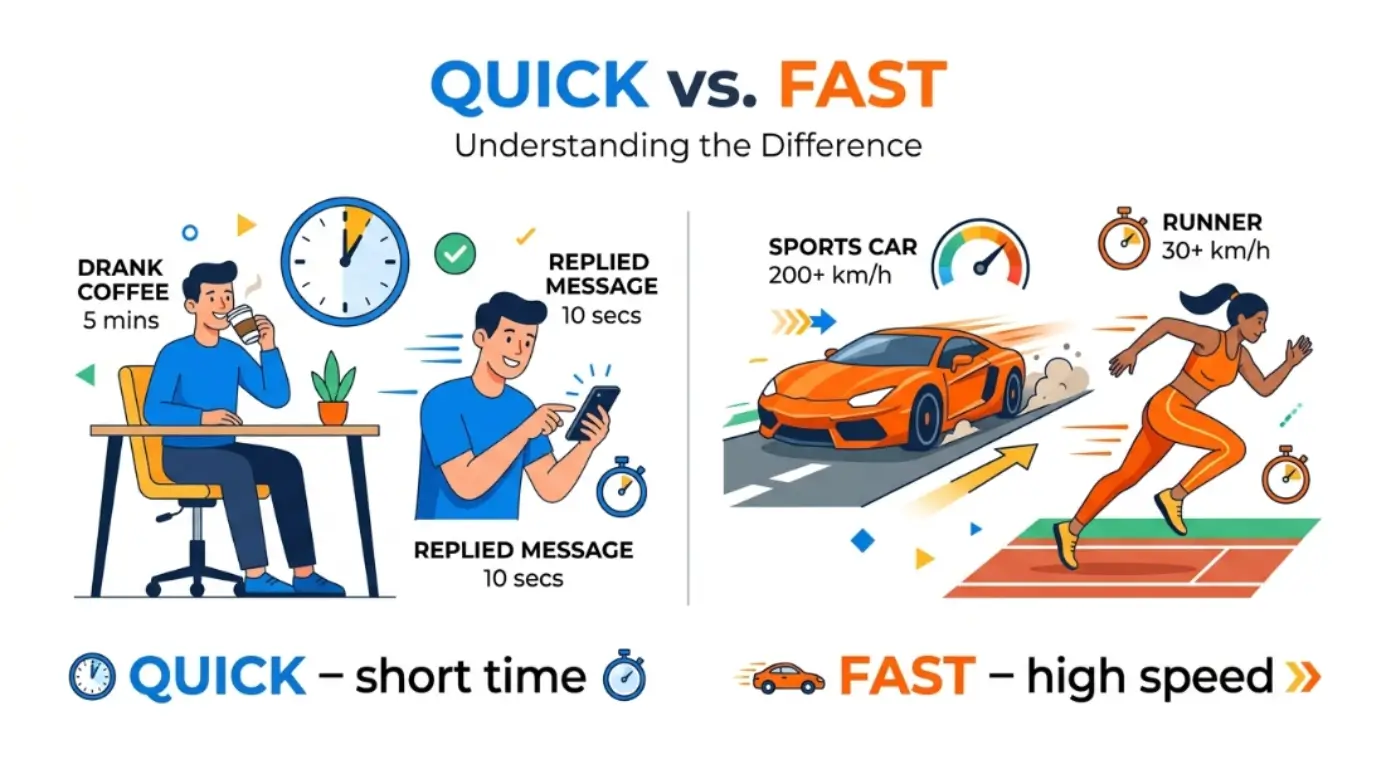
The difference between quick and fast is not just about speed—it’s about time, action, and response.
When you learn the difference between quick and fast, your communication becomes sharper. So let’s explore the difference between quick and fast in a fun and simple way.
Key Difference Between Quick and Fast
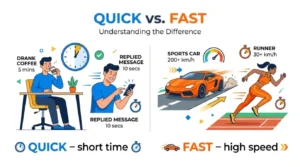
The main difference is simple:
- Quick = Something done in a short time
- Fast = Something moving at high speed
👉 Now let’s dive deeper and understand why this matters.
Why Is This Difference Important?
Knowing the difference between quick and fast helps both learners and experts use English correctly. In school, exams, or daily conversation, choosing the right word improves clarity. In society, clear communication reduces confusion. For example, doctors, engineers, and teachers rely on precise language. If someone says “fast response” instead of “quick response,” the meaning slightly changes. So, understanding this difference helps you speak smarter, write better, and avoid mistakes.
Pronunciation (US & UK)
- Quick
- US: /kwɪk/
- UK: /kwɪk/
- Fast
- US: /fæst/
- UK: /fɑːst/
👉 Now that you know how they sound, let’s explore their real differences.
Difference Between Quick and Fast (10 Points with Examples)
1. Meaning
- Quick = Short time
- She took a quick shower.
- He gave a quick answer.
- Fast = High speed
- The car is fast.
- He runs fast.
2. Focus
- Quick = Time duration
- Quick meeting finished early.
- Quick snack before work.
- Fast = Speed movement
- Fast train arrives early.
- Fast runner wins race.
3. Usage Type
- Quick = Often adjective
- Quick decision saved time.
- Quick action helped.
- Fast = Adjective + adverb
- Fast car drives well.
- He runs fast.
4. Context
- Quick = Actions
- Quick reply impressed boss.
- Quick fix worked.
- Fast = Motion
- Fast bike zoomed away.
- Fast wind blew hard.
5. Time vs Speed
- Quick = Less time
- Quick call ended soon.
- Quick nap refreshed him.
- Fast = More speed
- Fast plane travels far.
- Fast swimmer wins.
6. Human Behavior
- Quick = Smart response
- She is quick-minded.
- Quick thinker solves problems.
- Fast = Physical ability
- He is fast on feet.
- Fast runner wins races.
7. Emotional Use
- Quick = Sudden
- Quick anger faded soon.
- Quick smile appeared.
- Fast = Intense speed
- Fast heartbeat scared him.
- Fast breathing showed fear.
8. Collocations
- Quick = Quick look, quick bite
- Quick look at notes.
- Quick bite before class.
- Fast = Fast lane, fast car
- Driving in fast lane.
- Fast car race.
9. Formal vs Informal
- Quick = More casual
- Quick chat outside.
- Quick visit planned.
- Fast = Neutral
- Fast system works well.
- Fast process saves time.
10. Result
- Quick = Done early
- Quick job finished.
- Quick task done.
- Fast = Done with speed
- Fast worker moves quickly.
- Fast machine produces more.
Nature and Behaviour
- Quick shows mental speed or short time actions. It relates to thinking and reacting.
- Fast shows physical speed or movement. It relates to motion and force.
👉 People get confused because both relate to speed, but one is about time, the other about movement.
Comparison Table
| Feature | Quick | Fast |
| Meaning | Short time | High speed |
| Usage | Actions | Movement |
| Type | Adjective | Adjective & Adverb |
| Focus | Time | Speed |
| Example | Quick reply | Fast car |
| Similarity | Both relate to speed | Both express urgency |
Which Is Better in What Situation?
Use quick when talking about time. For example, “quick response” or “quick task.” It shows something happens in a short time. Use fast when talking about speed, like “fast car” or “fast runner.” It shows how quickly something moves. So, neither is better—they are just used in different situations. Choosing the right one depends on whether you mean time or speed.
Metaphors and Similes
- Quick as lightning ⚡
- Fast as a cheetah 🐆
- Quick mind like a computer
- Fast like the wind
Connotative Meaning
Quick
- Positive: Quick learner
- Neutral: Quick task
- Negative: Quick temper
Fast
- Positive: Fast progress
- Neutral: Fast car
- Negative: Fast life (risky lifestyle)
Idioms & Proverbs
- Quick on the draw
- In the fast lane
- Quick as a flash
- Live fast, die young
Works in Literature
- The Quick and the Dead – Western, Louis L’Amour, 1973
- Fast Food Nation – Non-fiction, Eric Schlosser, 2001
Movies
- The Quick and the Dead (1995, USA)
- Fast & Furious series (2001–present, USA)
FAQs
1. Is quick the same as fast?
No, quick relates to time, while fast relates to speed.
2. Can quick replace fast?
Not always. Context matters.
3. Which is more common?
Both are common but used differently.
4. Is “run quick” correct?
Usually “run fast” is correct.
5. Why do people confuse them?
Because both relate to speed or urgency.
How Both Are Useful Around Us
Both words help describe speed and time in daily life. We use “quick” for tasks and “fast” for movement. Together, they make communication clearer and more effective.
Conclusion
Understanding the difference between quick and fast is simple but powerful. Quick focuses on time, while fast focuses on speed. This small difference improves your speaking and writing skills.
Whether you are a student, writer, or professional, using the right word makes your message clearer. By learning the difference between quick and fast, you avoid confusion and sound more confident. So next time you speak, remember—are you talking about time or speed? That’s the key!