Last week, my neighbor was cooking chicken curry. She added dried powder from a small jar and then chopped fresh green leaves from her garden. I asked her what she used. She said, “These are spices, and these are herbs.” That moment made me think about the difference between spice and herb.
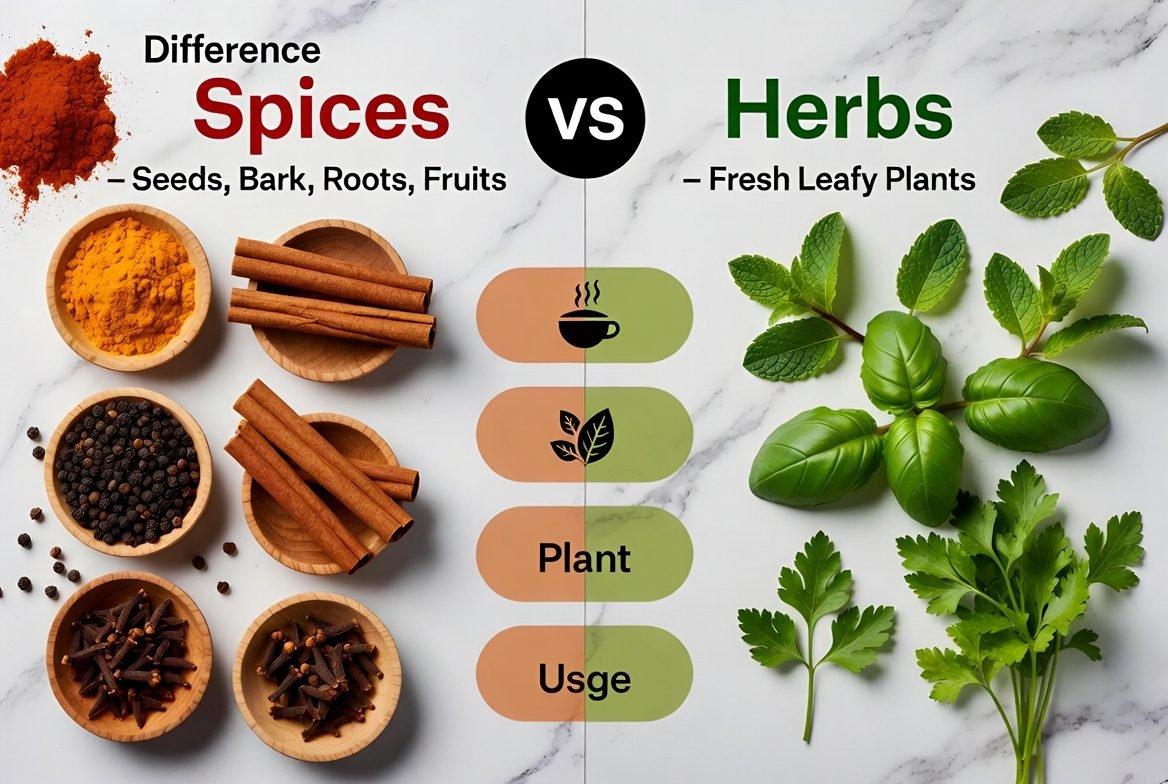
A spice usually comes from seeds, bark, roots, or fruits of a plant. An herb usually comes from the fresh green leaves of a plant. Many people mix them up. The difference between spice and herb may look small, but it changes flavor and cooking style.
Knowing the difference between spice and herb helps cooks, students, and food experts. In daily cooking and food science, the difference between spice and herb matters a lot.
Before we explore deeper, let us first understand how to say these words correctly.
Pronunciation (US & UK)
- Spice
- US: /spaɪs/
- UK: /spaɪs/
- US: /spaɪs/
- Herb
- US: /ɝːb/ (the “h” is silent)
- UK: /hɜːb/ (the “h” is pronounced)
- US: /ɝːb/ (the “h” is silent)
Key Difference Between the Both
The key difference is the plant part used.
- Spice comes from seeds, bark, roots, or fruits.
- Herb comes from green leafy parts of plants.
Why Is Their Difference Necessary to Know for Learners and Experts?
Understanding this difference is important in society. Cooking is part of culture. Chefs must know what to use for better taste. Food students study herbs and spices in nutrition and agriculture. Doctors also study them in herbal medicine.
Experts in food business need correct labeling. Farmers grow herbs and spices differently. Knowing the difference improves cooking skills and professional knowledge. It also helps people use natural ingredients safely and correctly.
Now, let us explore the detailed differences.
Difference Between Spice and Herb
Below are 10 clear points explained simply.
1. Plant Part Used
- Spice: Other plant parts.
- Example 1: Cinnamon (bark).
- Example 2: Clove (flower bud).
- Example 1: Cinnamon (bark).
- Herb: Leafy part.
- Example 1: Mint leaves.
- Example 2: Basil leaves.
- Example 1: Mint leaves.
2. Form
- Spice: Often dried and powdered.
- Example 1: Turmeric powder.
- Example 2: Black pepper powder.
- Example 1: Turmeric powder.
- Herb: Often fresh or lightly dried.
- Example 1: Fresh coriander.
- Example 2: Fresh parsley.
- Example 1: Fresh coriander.
3. Flavor Strength
- Spice: Strong and intense flavor.
- Example 1: Chili powder is hot.
- Example 2: Pepper is sharp.
- Example 1: Chili powder is hot.
- Herb: Mild and fresh flavor.
- Example 1: Mint is cooling.
- Example 2: Thyme is gentle.
- Example 1: Mint is cooling.
4. Quantity Used
- Spice: Used in small amounts.
- Example 1: A pinch of saffron.
- Example 2: Half teaspoon of cumin.
- Example 1: A pinch of saffron.
- Herb: Used in larger amounts.
- Example 1: Handful of spinach leaves.
- Example 2: Many basil leaves in pasta.
- Example 1: Handful of spinach leaves.
5. Shelf Life
- Spice: Long shelf life.
- Example 1: Dried turmeric lasts months.
- Example 2: Whole cloves last long.
- Example 1: Dried turmeric lasts months.
- Herb: Short shelf life.
- Example 1: Fresh mint spoils quickly.
- Example 2: Fresh dill dries fast.
- Example 1: Fresh mint spoils quickly.
6. Color
- Spice: Deep, strong colors.
- Example 1: Red chili powder.
- Example 2: Yellow turmeric.
- Example 1: Red chili powder.
- Herb: Mostly green.
- Example 1: Green parsley.
- Example 2: Green oregano.
- Example 1: Green parsley.
7. Usage in Cooking
- Spice: Added during cooking.
- Example 1: Added to curry base.
- Example 2: Mixed in soup while boiling.
- Example 1: Added to curry base.
- Herb: Added at the end or fresh.
- Example 1: Garnish on salad.
- Example 2: Sprinkled on pizza.
- Example 1: Garnish on salad.
8. Medicinal Use
- Spice: Often used in traditional medicine.
- Example 1: Ginger for cold.
- Example 2: Turmeric for healing.
- Example 1: Ginger for cold.
- Herb: Used in herbal teas.
- Example 1: Mint tea.
- Example 2: Chamomile tea.
- Example 1: Mint tea.
9. Growing Style
- Spice: Grown in tropical climates.
- Example 1: Pepper plants.
- Example 2: Cardamom farms.
- Example 1: Pepper plants.
- Herb: Grown in gardens easily.
- Example 1: Basil in pots.
- Example 2: Mint in backyard.
- Example 1: Basil in pots.
10. Aroma
- Spice: Warm and rich smell.
- Example 1: Cinnamon aroma.
- Example 2: Nutmeg fragrance.
- Example 1: Cinnamon aroma.
- Herb: Fresh and light smell.
- Example 1: Fresh rosemary scent.
- Example 2: Fresh coriander smell.
- Example 1: Fresh rosemary scent.
Nature and Behaviour
Spices are strong, warm, and powerful. They change the main taste of food.
Herbs are fresh, light, and aromatic. They enhance and balance flavors.
Why Are People Confused?
Both come from plants. Both add flavor. Both are used in cooking and medicine. Some plants give both herb and spice, which creates confusion.
Table: Difference and Similarity
| Aspect | Spice | Herb | Similarity |
| Plant Part | Seeds, bark, root | Leaves | Both from plants |
| Flavor | Strong | Mild | Add taste |
| Form | Dried | Fresh | Used in cooking |
| Shelf Life | Long | Short | Improve aroma |
| Color | Deep colors | Mostly green | Natural products |
Which Is Better in What Situation?
Spice is better for strong flavor dishes.
Spices are perfect for curries, stews, and baked foods. They give deep color and rich taste. In cold weather, warm spices like cinnamon and cloves add comfort. Spices also last longer, so they are useful for storage and trade.
Herb is better for fresh and light dishes.
Herbs work well in salads, pasta, soups, and garnishing. They give freshness and balance. In summer meals, herbs add cooling taste. Fresh herbs also improve presentation and aroma instantly.
Metaphors and Similes
- “She is the spice of my life.”
- “His speech added spice to the event.”
- “Her kindness is like a fresh herb in bitter times.”
Connotative Meaning
Spice – Often positive and exciting.
- Positive: “Life needs spice.”
- Negative: “Too much spice causes trouble.”
Herb – Mostly positive and natural.
- Positive: “Natural herbs heal gently.”
- Neutral: “Herb garden at home.”
Idioms and Proverbs
- “Variety is the spice of life.”
- “Spice things up.”
Example: Traveling can spice up your life.
Works in Literature
- Herb Garden – Elizabeth von Arnim (Novel, 1899)
- The Spice-Box of Earth – Leonard Cohen (Poetry, 1961)
Movies Related to Keywords
- Dune (2021, USA) – Focus on “spice”
- Herb & Dorothy (2008, USA)
Five Frequently Asked Questions
1. Is coriander a spice or herb?
Leaves are herb. Seeds are spice.
2. Are spices always hot?
No. Some are sweet like cinnamon.
3. Can herbs be dried?
Yes, but fresh is common.
4. Do spices expire?
Yes, but they last long.
5. Are herbs healthier?
Both have health benefits.
How Both Are Useful for Surroundings
Spices support trade and farming industries.
Herbs support home gardening and natural medicine.
Both improve food, health, and economy.
Final Words for Both
Spices bring heat and depth. Herbs bring freshness and balance. Both are important for flavor and culture.
Conclusion
The difference between spice and herb mainly depends on the plant part used and flavor strength. Spices come from seeds, bark, and roots, while herbs come from leaves.
Both are important in cooking, medicine, and culture. Many people confuse them because both come from plants and add taste.
However, understanding their unique roles improves cooking skills and knowledge. In every kitchen, spices and herbs work together to create delicious meals and healthy living.