Many people hear the terms laminectomy and discectomy for the first time when they are sitting in a hospital room, worried about back pain that has become unbearable.
A patient may come in with severe leg pain, numbness, or difficulty walking, and the doctor explains that the issue may require either a laminectomy or a discectomy. At that moment, both words sound similar and confusing.
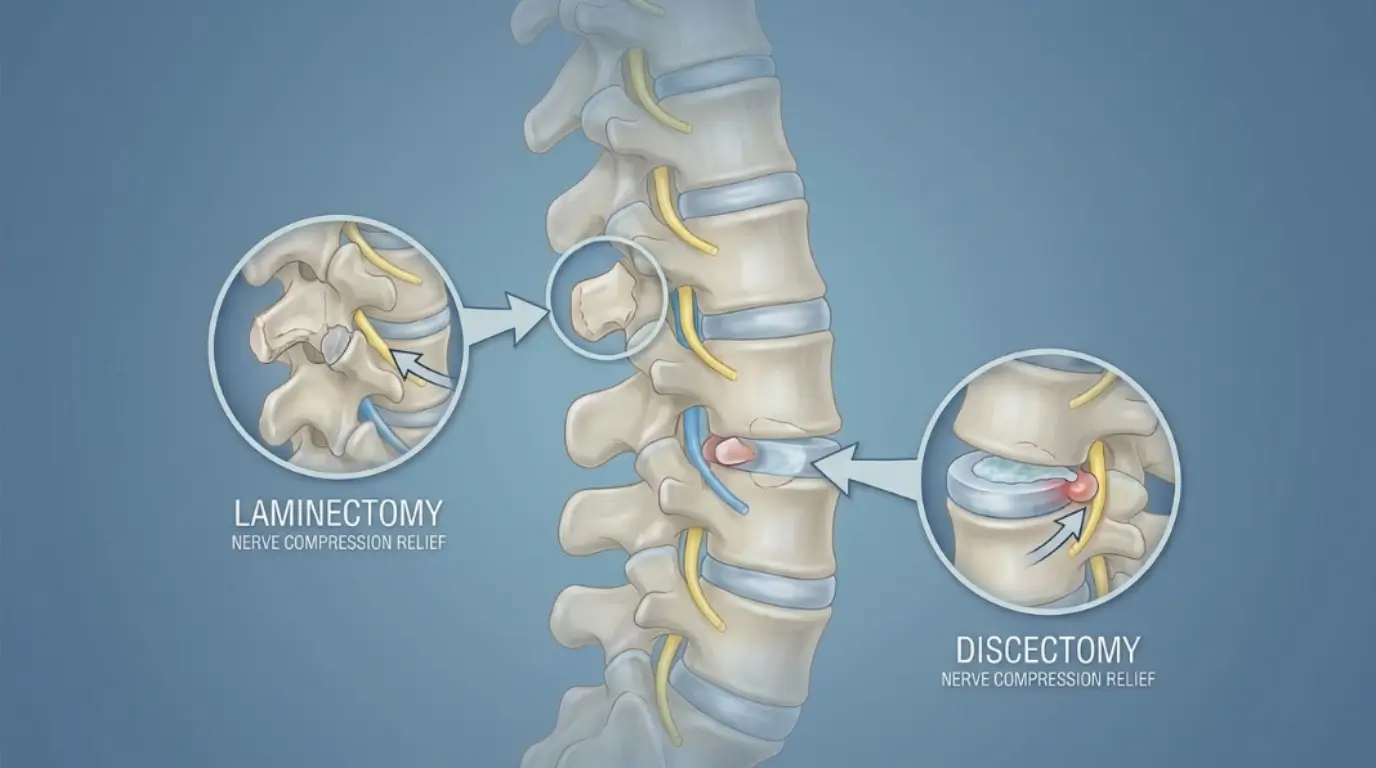
In simple terms, a laminectomy is a surgery that removes part of the vertebra (lamina) to relieve pressure on the spinal cord, while a discectomy removes the damaged portion of a spinal disc.
Understanding difference between laminectomy and discectomy is important because patients often hear both terms during spinal treatment.
Knowing the difference between laminectomy and discectomy helps reduce fear and improves decision-making. The difference between laminectomy and discectomy also guides better communication between doctors and patients.
- US Pronunciation:
- Laminectomy: /ˌlæmɪˈnɛktəmi/
- Discectomy: /dɪsˈkɛktəmi/
- UK Pronunciation:
- Laminectomy: /ˌlæmɪˈnɛktəmi/
- Discectomy: /dɪsˈkɛktəmi/
Now, let’s connect these terms to their key differences and medical importance.
Key Difference Between Laminectomy and Discectomy
The main difference is simple:
- Laminectomy removes part of the vertebra to relieve spinal cord pressure.
- Discectomy removes herniated disc material pressing on nerves.
Laminectomy is usually broader surgery, while discectomy is more targeted.
Why Knowing the Difference Matters
Understanding difference between laminectomy and discectomy is essential for patients, students, and healthcare workers. In society, back pain and spinal disorders are very common due to aging, poor posture, and injuries. Knowing whether a patient needs a laminectomy or discectomy helps in faster recovery decisions and reduces confusion during treatment discussions.
Doctors use these procedures in different cases, so misunderstanding them may lead to wrong expectations. When people clearly understand the difference between laminectomy and discectomy, they feel more confident during treatment planning. It also helps medical learners build a strong foundation in spinal anatomy and surgical procedures.
Difference Between Laminectomy and Discectomy (10 Key Points)
1. Definition
- Laminectomy: Removal of lamina (bone part of vertebra)
- Example 1: Treats spinal stenosis
- Example 2: Relieves nerve compression
- Discectomy: Removal of damaged disc material
- Example 1: Treats slipped disc
- Example 2: Reduces nerve pain in legs
2. Surgical Purpose
- Laminectomy: To create more space in spinal canal
- Example 1: Severe narrowing cases
- Example 2: Chronic back pain
- Discectomy: To remove herniated disc pressure
- Example 1: Sciatica relief
- Example 2: Disc bulge treatment
3. Area of Operation
- Laminectomy: Bone (lamina)
- Example 1: Lumbar spine
- Example 2: Cervical spine
- Discectomy: Soft disc tissue
- Example 1: Lower back disc
- Example 2: Neck disc
4. Invasiveness
- Laminectomy: More extensive surgery
- Example 1: Multi-level spine issue
- Example 2: Advanced degeneration
- Discectomy: Less invasive
- Example 1: Single disc problem
- Example 2: Early-stage herniation
5. Recovery Time
- Laminectomy: Longer recovery
- Example 1: 4–8 weeks healing
- Example 2: Physiotherapy required
- Discectomy: Faster recovery
- Example 1: 2–4 weeks recovery
- Example 2: Early mobility return
6. Pain Relief Focus
- Laminectomy: Reduces spinal pressure
- Example 1: Nerve compression relief
- Example 2: Chronic pain improvement
- Discectomy: Removes nerve irritation
- Example 1: Sciatica pain reduction
- Example 2: Leg pain relief
7. Medical Conditions Treated
- Laminectomy: Spinal stenosis, arthritis
- Example 1: Age-related narrowing
- Example 2: Bone overgrowth
- Discectomy: Herniated/slipped disc
- Example 1: Disc rupture
- Example 2: Sciatic nerve pain
8. Surgical Tools Used
- Laminectomy: Bone removal tools
- Example 1: Bone cutter
- Example 2: Microsurgical drill
- Discectomy: Disc removal tools
- Example 1: Micro forceps
- Example 2: Endoscopic instruments
9. Hospital Stay
- Laminectomy: Longer stay
- Example 1: 2–5 days admission
- Example 2: Monitoring required
- Discectomy: Short stay
- Example 1: Same-day discharge
- Example 2: 1-day observation
10. Risk Level
- Laminectomy: Higher due to bone removal
- Example 1: Bleeding risk
- Example 2: Instability risk
- Discectomy: Lower risk
- Example 1: Minimal tissue damage
- Example 2: Quick healing process
Nature and Behavior of Both Procedures
Laminectomy is a structural decompression surgery that changes the physical framework of the spine. It behaves like a “wide relief system” by creating space for nerves. Discectomy, on the other hand, is a precision surgery that targets only the damaged disc material. It behaves like a “focused repair system,” removing only what is necessary while keeping surrounding structures intact.
Why People Get Confused
People often confuse difference between laminectomy and discectomy because both are spinal surgeries, both relieve nerve pain, and both are performed in similar body regions. Even symptoms like back pain and leg pain overlap, making the distinction harder for patients. Medical terminology also sounds complex, adding to confusion.
Table: Difference and Similarity
| Feature | Laminectomy | Discectomy |
| Target | Bone (lamina) | Disc material |
| Purpose | Create space | Remove pressure |
| Invasiveness | More extensive | Less invasive |
| Recovery | Longer | Faster |
| Similarity | Both treat nerve compression and back pain |
Which Is Better in What Situation?
Neither surgery is universally better. A laminectomy is better when spinal narrowing is severe and multiple nerves are compressed. A discectomy is better when a single disc is herniated and pressing on a nerve. Doctors decide based on MRI results, symptoms, and patient condition. So, the difference between laminectomy and discectomy determines which procedure fits a specific medical case, not which is superior overall.
Metaphors, Similes & Connotative Meaning
- Laminectomy (Metaphor): “Opening a crowded tunnel for traffic flow.”
- Discectomy (Metaphor): “Removing a stone from a tight pipe.”
- Connotative meaning:
- Laminectomy: Neutral to positive (relief but major surgery)
- Discectomy: Positive (targeted, quick relief)
Idioms or Proverbs (Related Concepts)
- “Cut to the root of the problem” → Discectomy example (removing exact disc issue)
- “Make space to breathe” → Laminectomy example (relieving pressure)
Literature References
- Gray’s Anatomy (Medical reference book, Henry Gray, 1858–updated editions)
- Clinical Orthopaedic Surgery (Textbook, Samuel Turek, 1984)
Movies Featuring Spine Surgery Themes
- The Doctor (1991, USA) – depicts medical surgeries and patient recovery
- Something the Lord Made (2004, USA) – highlights surgical innovation and procedures
FAQs
1. Is laminectomy more serious than discectomy?
Yes, because it involves bone removal and wider spinal structure changes.
2. Which surgery recovers faster?
Discectomy usually has faster recovery.
3. Are both used for back pain?
Yes, but for different causes of nerve compression.
4. Can both be done together?
Yes, in complex spinal cases both may be combined.
5. Which is more common?
Discectomy is more common due to frequent disc herniation cases.
Conclusion
Understanding the difference between laminectomy and discectomy is important for anyone dealing with spinal pain or studying medical science.
Both procedures aim to relieve pressure on spinal nerves, but they work in different ways. A laminectomy focuses on removing part of the vertebra to create space, while a discectomy targets and removes damaged disc material.
The difference between laminectomy and discectomy helps patients make informed decisions and reduces fear during treatment discussions.
Although they sound similar, their methods, recovery times, and medical uses are quite different. In modern healthcare, both surgeries play a vital role in improving quality of life.
When patients clearly understand the difference between laminectomy and discectomy, they can better trust medical advice and choose the right treatment path with confidence.