When learning English, one of the most common confusion points for students is understanding the difference between “a” and “the”. Imagine you walk into a bakery. You say, “I want a cake”—you are talking about any cake available.
But if you say, “I want the cake”, you are pointing to a specific cake, maybe the one you saw earlier.
This simple story shows how important it is to understand the difference between “a” and “the” in daily communication.
Many learners struggle because they don’t fully grasp the difference between “a” and “the”, even though both are small words.
Mastering the difference between “a” and “the” helps you speak and write English more naturally and confidently.
In this guide, we will clearly break down their meaning, usage, and importance so you never get confused again.
Key Difference Between “A” and “The”
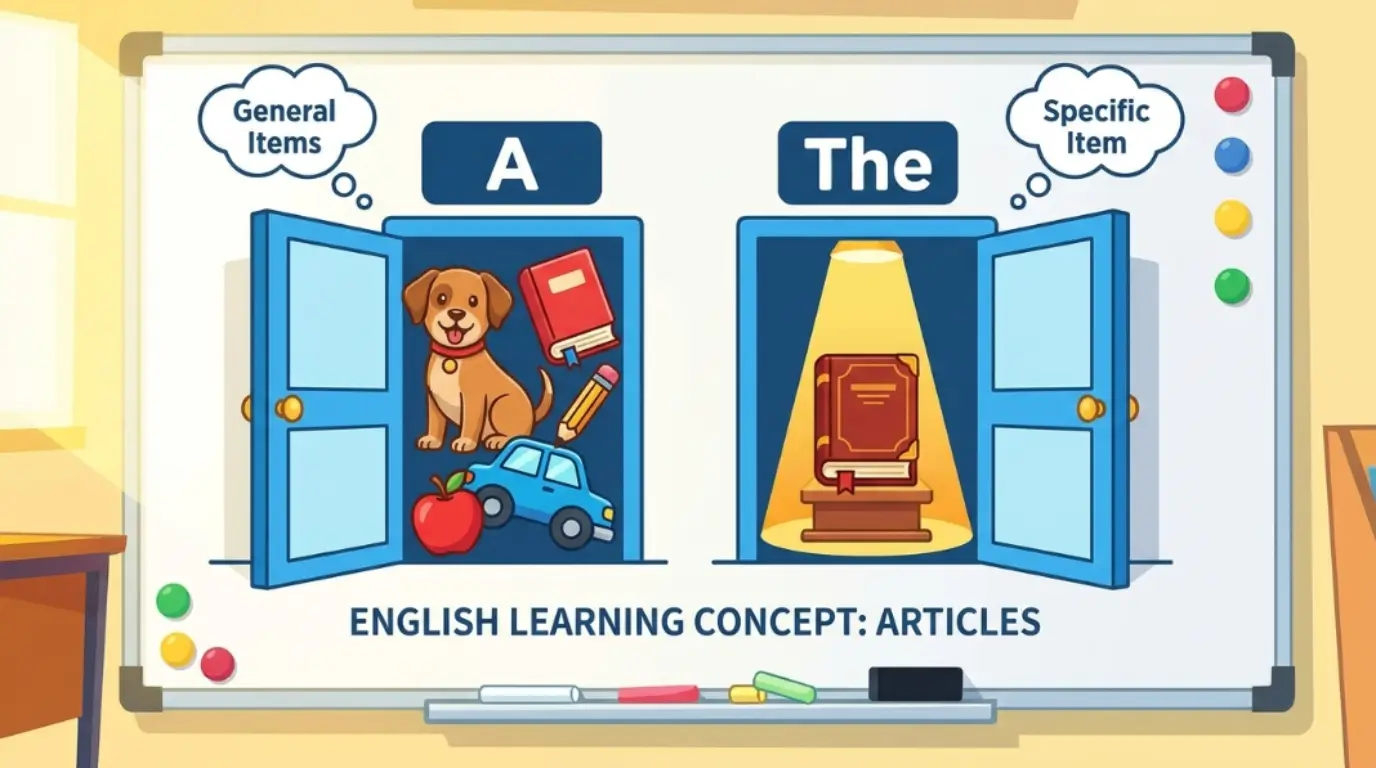
- “A” (indefinite article): used for non-specific things
- “The” (definite article): used for specific things
Why Knowing the Difference Between “A” and “The” is Important
Understanding the difference between “a” and “the” is essential for students, professionals, and writers. In schools, incorrect usage can change meaning in exams. In business communication, using the wrong article can make messages unclear or unprofessional. Even in daily conversations, wrong usage can confuse listeners.
Experts also rely on correct article usage for clear writing in reports, emails, and presentations. So, learning the difference between “a” and “the” improves clarity, confidence, and communication skills in society.
Pronunciation of “A” and “The” (UK & US)
- A
- UK: /ə/ (uh)
- US: /eɪ/ (ay)
- The
- UK: /ðə/ (before consonant sounds), /ðiː/ (before vowel sounds)
- US: /ðə/, /ðiː/ (similar usage)
👉 Now that pronunciation is clear, let’s smoothly move into deeper usage differences.
10 Key Differences Between “A” and “The”
1. Specific vs General
- A: refers to any one item
- Example: I saw a dog in the street.
- Example: She bought a book.
- The: refers to a specific item
- Example: I saw the dog you talked about.
- Example: She read the book on the table.
2. First Mention vs Second Mention
- A: first introduction
- Example: I met a man yesterday.
- Example: She found a key.
- The: already mentioned
- Example: The man was kind.
- Example: The key was lost.
3. Countable Usage
- A: only with singular countable nouns
- Example: A car is parked outside.
- Example: I need a pen.
- The: singular or plural
- Example: The cars are new.
- Example: The pen is mine.
4. Unique Objects
- A: never used
- The: used for unique things
- Example: The sun rises in the east.
- Example: The moon is bright tonight.
5. Profession Usage
- A: describes profession
- Example: He is a doctor.
- Example: She is a teacher.
- The: not used for profession generally
6. General Statements
- A: general idea
- Example: A lion is a dangerous animal.
- Example: A student must study.
- The: specific context
- Example: The lion in the zoo is old.
- Example: The student who failed is absent.
7. Plural vs Singular Context
- A: only singular
- The: both singular and plural
- Example: The apples are fresh.
- Example: The apple is red.
8. First Time vs Known Context
- A: unknown
- Example: I saw a girl.
- Example: He found a wallet.
- The: known
- Example: The girl is my sister.
- Example: The wallet is his.
9. Place Names
- A: not used
- The: used for some places
- Example: The Himalayas
- Example: The USA
10. Emotional Emphasis
- A: neutral
- Example: She is a hero.
- The: strong emphasis
- Example: She is the hero of the story.
Nature and Behavior of “A” and “The”
“A” behaves like an introducer—it brings something new into conversation without detail. It is light, general, and flexible. “The,” on the other hand, behaves like a pointer. It refers to something already known, specific, or unique. This difference makes “a” casual and introductory, while “the” feels precise and definite.
Why People Get Confused
People often confuse the difference between “a” and “the” because both are placed before nouns and sometimes seem interchangeable. In many languages, articles don’t exist, so learners struggle to understand when to specify or generalize. Also, English rules change depending on context, making it harder for beginners.
Comparison Table
| Feature | A | The |
| Type | Indefinite | Definite |
| Meaning | Any one | Specific one |
| Usage | First mention | Known thing |
| Quantity | Singular only | Singular & plural |
| Emphasis | General | Specific |
Which is Better and When?
Neither “a” nor “the” is better—they serve different purposes. Use “a” when introducing something new or talking generally. Use “the” when both speaker and listener know exactly what is being discussed. Choosing correctly improves clarity and avoids confusion in communication, writing, and exams.
Metaphors and Similes
- “A” as a doorway: It opens the conversation to something new.
- Example: He is a star in making.
- “The” as a spotlight: It highlights something specific.
- Example: She is the star of the show.
Connotative Meaning
- “A”
- Positive: openness, possibility
- Neutral: general reference
- Example: He is a leader (one of many)
- “The”
- Positive: importance, uniqueness
- Neutral: identification
- Example: He is the leader (main one)
Idioms & Expressions
- A
- “A piece of cake” (very easy)
- “A blessing in disguise” (hidden good)
- The
- “The last straw” (final problem)
- “The best of both worlds” (perfect situation)
Literature Examples
- A Tale of Two Cities – Charles Dickens (Historical Fiction, 1859)
- The Great Gatsby – F. Scott Fitzgerald (Novel, 1925)
- A Room with a View – E.M. Forster (Romance, 1908)
- The Old Man and the Sea – Ernest Hemingway (Fiction, 1952)
Movies Based on “A” and “The” Titles
- A Beautiful Mind (USA, 2001)
- A Star Is Born (USA, 2018)
- The Godfather (USA, 1972)
- The Lion King (USA, 1994)
Frequently Asked Questions (FAQs)
1. What is the main difference between “a” and “the”?
“A” is general, while “the” is specific.
2. Can we use “the” for everything?
No, it is only for specific or known things.
3. Is “a” used with plural nouns?
No, only singular nouns.
4. Why is “the sun” used without “a”?
Because it is unique.
5. Which is more common in English?
Both are equally important and used in different contexts.
Conclusion
The difference between “a” and “the” is small in form but very important in meaning. “A” introduces general ideas, while “the” points to specific things.
Mastering the difference between “a” and “the” improves your speaking, writing, and understanding of English.
Whether in exams, business communication, or daily conversation, using these articles correctly makes your language clearer and more professional.
Once you practice regularly, the difference between “a” and “the” will become natural and effortless in your communication.